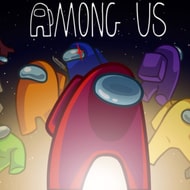
You round the corner into Electrical on The Skeld just as the lights cut out, and by the time you finish the wiring task in the dark, someone in Cafeteria has already hit the emergency button over a body found in Navigation. That’s the entire rhythm of Among Us compressed into about ninety seconds: a sabotage, a scramble to fix it, a dead crewmate, and a vote. It’s a strange loop to build a decade of relevance on, but Among Us has managed exactly that, growing from a quiet 2018 release into one of the most recognizable social deduction games around.
Crewmates, Impostors, and the Basic Loop of Among Us
Every lobby splits players into two camps. Most of the crew are Crewmates, whose job is to finish a checklist of tasks scattered around the map while quietly watching each other for suspicious behavior. Hidden among them are one to three Impostors, who don’t have real tasks at all — they fake them, kill Crewmates when no one’s looking, and sabotage ship systems to create chaos or thin the herd. A lobby can run anywhere from 4 to 15 players, and the impostor count scales with that number and whatever the host sets before launch.
Impostors get a kill cooldown that resets after every kill, so pacing murders without getting caught in the act is the whole skill of the role. They can also vent — ducking into vent systems to move across a room or escape a crime scene, which is one of the fastest ways to blow a cover if a Crewmate happens to be watching. Engineers and Shapeshifters are the exceptions; both can use vents too, which is exactly why an accusation of “someone saw them vent” isn’t automatically a confession anymore.
The rest of the loop runs through the emergency button and body reports. Either one gathers the whole lobby, shows who’s dead, and opens a short discussion window before a vote. Get a plurality and that player is ejected out an airlock; get a tie and nobody goes. Impostor mains talk about this stage as the real game — everything before it is just setup for the argument that follows.
The Real Maps: The Skeld, MIRA HQ, Polus, The Airship, and The Fungle
Among Us currently ships with five maps, and each one changes the shape of the social deduction puzzle in a different way:
- The Skeld — the original 2018 spaceship map, compact and famous for its single-file hallways where a “who was where” alibi actually means something.
- MIRA HQ — a small orbital headquarters with a distinctive decontamination airlock system Impostors can abuse to strand Crewmates.
- Polus — a sprawling surface base on a frozen planet, with outdoor sections that make it easier to pick off a lone Crewmate unseen.
- The Airship — a Henry Stickmin-themed dirigible and the largest map in the game, with multiple floors connected by ladders and a moving cargo lift.
- The Fungle — a jungle island map built around uneven terrain and a much less linear task flow than the older maps.
The five-map roster didn’t arrive all at once. The Skeld launched with the game in 2018, MIRA HQ followed on August 8, 2019, Polus landed a few months later on November 12, 2019, The Airship joined the rotation on March 31, 2021, and The Fungle didn’t show up until October 24, 2023 — five years after the base game itself came out.
By the time you’ve put real hours into The Airship, its size stops feeling like a novelty and starts feeling like a liability. Its multiple floors mean a Crewmate can die on one level while the rest of the lobby is scattered three floors away, and alibis that would hold up instantly on The Skeld fall apart because nobody can say for certain who was near who.
Tasks, Common Tasks, and the Tunneling Trap
Tasks in Among Us fall into two rough categories. Visual tasks — things like Clear Asteroids or Fix Wiring — show a short animation that other players can actually witness, which means catching an Impostor mid-fake is one of the cleanest reads in the game. Common tasks are ones every Crewmate has, so an Impostor who doesn’t realize a task isn’t common can accidentally out themselves just by doing it in front of someone who doesn’t have it.
New players get told the same warning constantly: don’t tunnel on your task list. Grinding through Swipe Card, Download Data, and Empty Garbage back-to-back feels productive, but it also means walking alone into empty rooms over and over, which is exactly the pattern an Impostor is hoping to find. The community’s standard advice is to stick near at least one other player whenever possible, since being seen is its own form of protection.
Self-reporting is the other classic beginner mistake. Calling in a body you technically caused looks suspicious almost by definition, and most guides frame it as a last resort rather than a routine option. Calling unnecessary emergency meetings carries its own cost too, since every meeting clears dead bodies off the map and destroys evidence a sharper player might have used later.
Sabotage Systems: Reactor Meltdown, O2, Lights, and Comms
Sabotage is the Impostor’s other lever, separate from killing outright. Reactor Meltdown and O2 depletion are both critical sabotages with a hard timer — Crewmates have to split up and hit two separate panels at once, or the whole crew loses on the clock. It’s a rare moment where the game forces cooperation even between people who don’t trust each other.
Lights sabotage cuts vision radius down to almost nothing, which is less about killing anyone directly and more about making it harder for Crewmates to track who was where. Comms sabotage is nastier in a different way: it knocks out the task list, the map, security cameras, and the admin table all at once, stripping away most of the tools Crewmates use to build a case against anyone.
Door sabotage is the odd one out because it’s the only sabotage that doesn’t block an emergency meeting from being called mid-sabotage. It’s a small rule, but veteran players build entire reads around it — a suspiciously well-timed door lock right before a body turns up is the kind of detail that gets picked apart in the after-meeting chat.
Every Role Added Since Launch
Among Us launched with just Crewmate and Impostor, and everything else came later as optional add-ons a host can toggle. The order they arrived in roughly tracks the game’s growth:
- Engineer and Scientist — Engineers can use vents like an Impostor to cross the map fast, while Scientists can check the vitals monitor from anywhere instead of walking to Admin.
- Shapeshifter — an Impostor role that can briefly take on another living player’s appearance, cosmetics and all.
- Guardian Angel — a ghost role given to a Crewmate after death, who can still shield a living player from a kill for a short window.
- Tracker, Noisemaker, and Phantom — added together in June 2024; Trackers can plant a tracking marker on another player’s mini-map icon, Noisemakers trigger a death-location ping when killed, and Phantoms are an Impostor role that can briefly turn invisible.
- Detective and Viper — added in September 2025; Detectives can review case files and interrogate suspects about where they were, while Vipers are an Impostor variant with an acid ability that dissolves a body over time.
Some of these roles change strategy more than others. A Viper changes how long evidence stays on the map, a Tracker changes how safe it feels to wander off alone, and a Guardian Angel means dying doesn’t necessarily take you out of the round’s decision-making the way it used to.
Reading Meetings Like an Among Us Veteran
Once you’ve sat through enough meetings, the actual voting starts to matter less than the seconds right before it. Experienced players track who claimed which common task, who was seen near a vent, and who suddenly changed their story between the first and second time they were asked about it. None of that is written down anywhere in the game itself — it’s pure community meta, built up over years of lobbies.
Outside of match mechanics, cosmetic seasons called Cosmicubes keep longtime players checking back in — themed bundles like the Showbiz Cosmicube tied to the game’s animated series, purchased with in-game currencies called Beans and Stars. None of it changes balance, but tracking which Cosmicube is currently available has become its own small ritual for players who’ve long since stopped caring about winning every round.
Among Us exploded in September 2020, reportedly reaching around 60 million daily active users, largely thanks to streamers who turned lobbies into appointment content. Not everything about that growth aged well — cheaters running instant-kill or wallhack-style hacks have been a recurring headache for the community, and casual complaints that the Crewmate side can feel like a repetitive chore compared to the more active Impostor role are common enough that plenty of players openly admit they queue hoping for Impostor every single round.
Common Questions About Among Us
How many players and Impostors are in a normal Among Us lobby?
A standard lobby holds between 4 and 15 players, and the host can set anywhere from one to three Impostors depending on that headcount. Bigger lobbies usually mean longer task lists and more room for a rushed Impostor to cause damage before anyone notices.
What actually happens when you report a body in Among Us?
Reporting a body or hitting the emergency button pulls everyone into a meeting, shows which players are dead, and removes the body from the map before opening a timed discussion. A vote follows, and whoever gets a plurality is ejected, while a tie means nobody goes.
Can Impostors fake doing tasks in Among Us?
Yes, for the most part — Impostors can stand at a task station and mimic the motion without it actually completing anything. The one risk is a visual task, since those produce an on-screen animation that a sharp-eyed Crewmate standing nearby can tell isn’t actually happening.
Among Us keeps pulling people back into one more lobby because the tension resets every match — a new map like The Fungle, a new Cosmicube to chase, or just one more Reactor Meltdown you’re determined to survive without getting caught near a vent. That loop of small suspicions building into a single accusation is still the whole point, years after The Skeld first opened its doors.