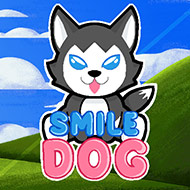
Smile Dog sounds like it should be unsettling, but what actually loads is one of the calmest genres there is — a straightforward spot-the-difference game built entirely around scenes full of dogs, with nothing scarier lurking in the pixels than a misplaced collar or a missing tennis ball.
Comparing Two Scenes Under Time Pressure
Each level in Smile Dog puts two nearly identical dog scenes side by side, and your job is to click through every difference before moving on to the next one. The differences aren’t always obvious — some are a color shift on a small object, others are something missing entirely from one side, and a few are subtle enough that they take multiple passes over the same scene to catch.
Beginners tend to scan a scene in one sweeping glance and miss the smaller details tucked into corners or background elements. What actually works better is breaking each scene into quadrants mentally and comparing them one section at a time, rather than trying to take in the whole image at once.
- Color shifts: small palette changes on background or foreground objects.
- Missing objects: items present on one side and absent on the other.
- Position changes: the same object shifted slightly from its original spot.
Why the Simplicity Works in Smile Dog’s Favor
There’s no combat, no fail state beyond running long on a level, and no complicated systems layered on top of the core comparison loop. That simplicity is exactly why Smile Dog holds up as a short-session game — it’s built for a quick break rather than a long commitment, and later levels raise the challenge purely by shrinking the differences rather than adding new mechanics.
- Scan each scene in sections rather than all at once.
- Recheck areas you’ve already cleared if you’re stuck near the end of a level.
Some players find the later levels a little too subtle for comfort, with differences small enough to feel more like an eye test than a game — a fair criticism for a format that leans this hard on visual precision rather than variety.
Is Smile Dog a horror game despite the name?
No — it’s a casual spot-the-difference game built around dog-themed scenes, with nothing horror-related in the actual gameplay.
Do the differences get harder in later levels?
Yes, later scenes tend to hide smaller and more subtle differences than the early levels, which are generally easier to spot at a glance.
Is there a penalty for wrong clicks in Smile Dog?
Wrong clicks generally cost you time rather than ending a level outright, keeping the pressure focused on speed and accuracy rather than survival.
Smile Dog earns its charm from restraint — no gimmicks, no twist, just dog scenes and the small, satisfying click of finding a difference nobody else in the room noticed first. It’s proof that a genre this old can still hold attention when the execution is clean enough.