You answer the first question in The Impossible Quiz correctly, feel a small flicker of confidence, and by question four that confidence is already gone — because this quiz was never testing what you know. It’s testing whether you can spot when a question is lying to you, and most of the first playthrough is just getting used to being wrong for reasons that have nothing to do with the actual subject matter.
| Genre |
Trick-logic puzzle quiz |
| Lives |
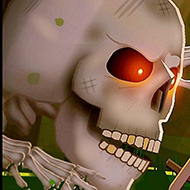
Three, shown as skull icons |
| Skips |
A limited number hidden across select questions |
| Format |
Multiple choice with intentionally deceptive options |
Why Logic Stops Working Early in The Impossible Quiz
The first handful of questions in The Impossible Quiz look like a normal trivia format, and that’s the setup for the joke — once the game establishes a pattern, it immediately breaks it. A question that looks like basic geography might actually be testing whether you’ll click the answer written in a different font, or whether you’ll notice a typo hiding the real clue.
What beginners get wrong almost universally is trusting the surface meaning of a question. The Impossible Quiz rewards players who read every word, every visual detail, and every option before committing, because the “obvious” answer is frequently the trap the question was built around in the first place.
Lives, Skulls, and How Fast You Can Lose Them
Three skull-shaped lives stand between you and starting over from question one, and The Impossible Quiz doesn’t ease you into losing them. A single wrong guess on an early trick question can burn a life just as easily as a genuinely difficult one later on, which means caution matters from the very first screen rather than only once the questions get visibly harder.
Skips exist as a mercy mechanic, but they’re hidden as small icons on select questions rather than handed out freely, and finding one usually means clicking somewhere on screen that has nothing obviously to do with the question itself.
Bombs, Passwords, and the Questions That Punish Hesitation
Certain questions in The Impossible Quiz swap the usual multiple-choice format for a countdown — a bomb-style timer that forces you to guess a password before it runs out, with no clear indication of what that password actually is beyond context clues buried in the question itself. These moments spike the tension precisely because thinking too long costs you the question by default.
Community discussion around The Impossible Quiz tends to focus heavily on these bomb questions specifically, since they’re the clearest example of the game punishing hesitation rather than wrong answers — sometimes just running out the clock is the failure state, independent of what you actually click.
- Trick questions: the visually obvious answer is frequently a deliberate trap.
- Hidden skips: found by clicking unexpected areas on select question screens, not handed out automatically.
- Countdown questions: require guessing under time pressure rather than reasoning through options.
What Players Debate Most About the Difficulty
There’s an honest split in how players talk about The Impossible Quiz’s difficulty. Some treat the illogical trick questions as the entire point — a comedy quiz built to subvert expectations rather than test knowledge — while others find the total absence of fair, learnable logic frustrating, since no amount of general knowledge actually protects you from a question built purely on wordplay or visual misdirection.
Both reactions are fair. The Impossible Quiz was never trying to be a knowledge test in the traditional sense; it’s closer to a puzzle box that keeps changing its own rules mid-solve. Part of what keeps the format replayable is that memorizing the answers doesn’t fully spoil the experience the way it would in a genuine trivia quiz — the jokes and misdirection still land on a second run, just with a little less panic attached to them.
How many lives do you get in The Impossible Quiz?
Three, shown as skull icons, and losing all of them sends you back to the very first question rather than to a checkpoint.
Are the trick questions actually solvable through logic?
Rarely through conventional logic — most rely on wordplay, visual misdirection, or noticing something outside the question’s literal text.
What are the skip icons for?
They let you bypass a single question without losing a life, but they’re hidden as clickable details on select questions rather than given out freely.
The Impossible Quiz earns its name honestly — not because the questions are hard in a conventional sense, but because the entire format is built to make you distrust your first instinct on every single one. By the time you’ve learned to read every question for the trick hiding inside it, you’ve stopped playing a quiz and started playing something closer to a puzzle that just happens to look like one.